[BETA ACCESS] Confidential Technical Hair Analysis & Safety Specifications
Your case has been prioritized and assigned to a Seoul-based Hair Texture Specialist for a manual structural audit of your hair.
To generate your highest-accuracy Technical Safety Card, please complete the following clinical intake form.
Accuracy is critical. High-resolution images allow our analysts to evaluate fine structural irregularities that standard salon consultations often miss.
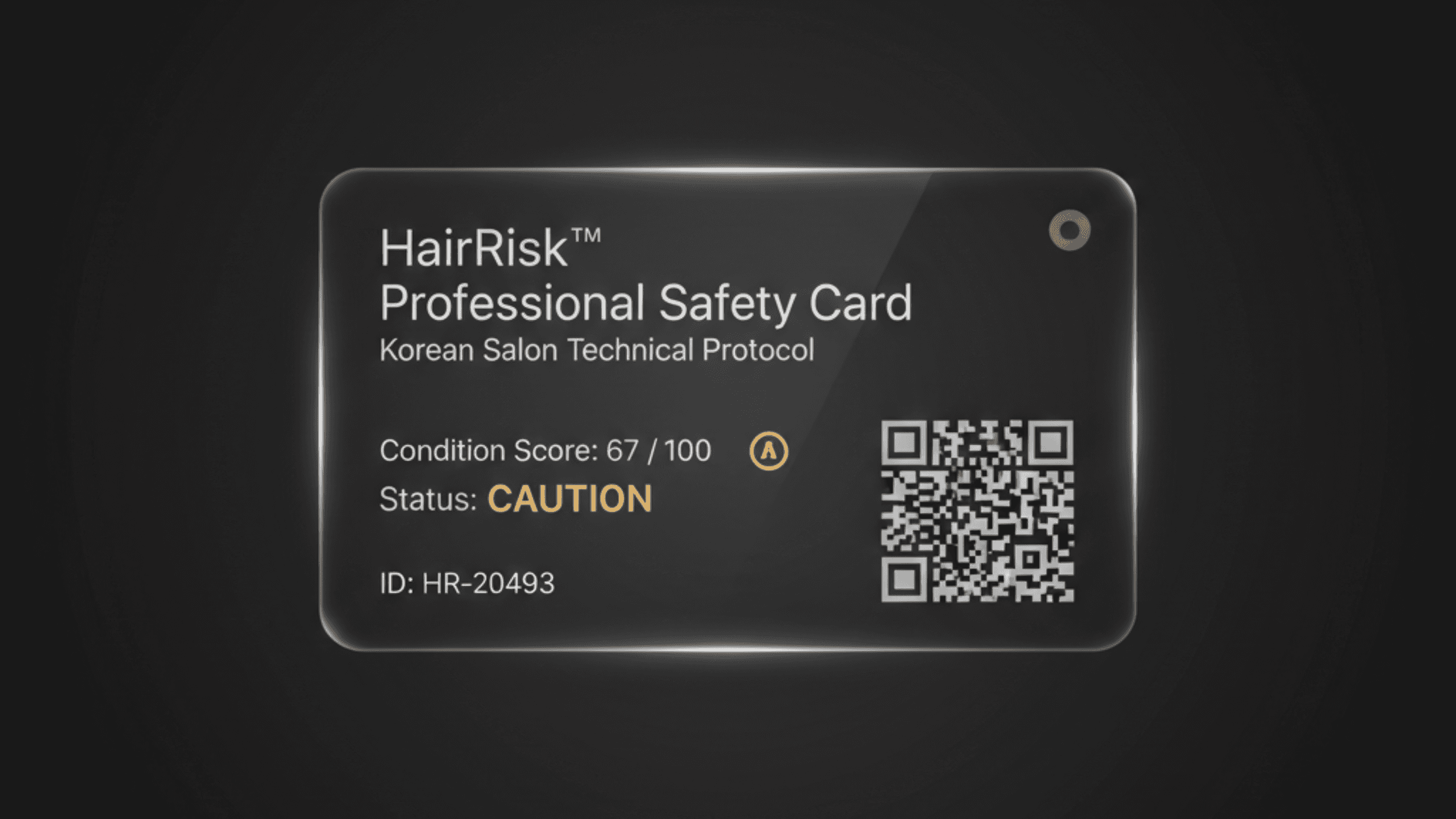
✔ Personalized Technical Safety Card (PDF)
✔ Chemical & Heat Safety Parameters for Your Stylist(Apple / Google Wallet)
✔ Zone-Based Application Guidelines (Roots / Mid-lengths / Ends)
✔ Risk Level Score & Primary Risk Factors
✔ Professional Notes for Salon Communication
Your Nationality (for technical profilling)
*
What is your email address?
*
Please use the same email address you used for the free analysis to sync your records correctly.
✅Section 1: Visual Audit (Required)
Our analysts require clear, non-filtered images to assess cuticle condition accurately.
Photo 1: Back View (Full Length)
Instruction: Stand in natural light. Capture your hair from the roots to the very ends.
Analyst Note: Used to evaluate overall density and "shatter patterns" in the hair structure.
Photo 2: Macro Close-up (The Ends)
Instruction: Hold the last 5cm (2 inches) of your hair close to the camera.
Analyst Note: Used to identify high-porosity zones where chemical melting usually starts.
Photo 3: The "Stretch Test" (Wet or Dry)
Instruction: Take a close-up of a small section of your hair being gently pulled.
Analyst Note: Used to estimate hair elasticity and internal protein strength.
Photo 4: Desired Style Reference
Instruction: Upload a photo of the exact look you want to achieve in Seoul. (At least 3 photos required)
✅ Section 2: Chemical & Heat History
This section directly influences the technical safety parameters in your report.
Q2-1. Bleaching History (Last 24 Months)
*
Bleaching history directly affects porosity, strength, and chemical tolerance.
Q2-1. Bleaching History (Last 24 Months)
Q2-2. Chemical Treatments (Check all that apply):
*
Previous chemical services can influence how your hair reacts to new treatments.
Q2-2. Chemical Treatments (Check all that apply):
Q2-3. Home Coloring or Bleaching:
Have you ever bleached or colored your hair at home?
*
Home coloring can strongly affect how your hair reacts to salon chemicals.
What type of home coloring or bleaching did you use?
*
What type of home coloring or bleaching did you use?
✅ Section 3: Daily Routine & Sensitivity
Q3-1. How often do you use heat tools (flat iron, curling iron, blow dryer)?
*
Frequent heat exposure can weaken the cuticle and increase breakage risk.
Q3-1. How often do you use heat tools (flat iron, curling iron, blow dryer)?
Q3-2. When you use heat tools, approximately what temperature do you use?
*
Higher temperatures increase the risk of structural damage.
Q3-2. When you use heat tools, approximately what temperature do you use?
Q3-3. Have you ever noticed your hair stretching excessively or feeling gummy when wet?
*
Changes in elasticity can indicate internal protein weakening.
Q3-3. Have you ever noticed your hair stretching excessively or feeling gummy when wet?
Q3-4. Have you experienced scalp pain, irritation, or burning during chemical services?
*
Sensitivity history helps determine safe chemical strength.
Q3-4. Have you experienced scalp pain, irritation, or burning during chemical services?
What service are you hoping to receive in Korea? (e.g., perm, balayage, root touch-up) (Recommended)
Analyses are conducted by hair texture analysts based in Seoul.